
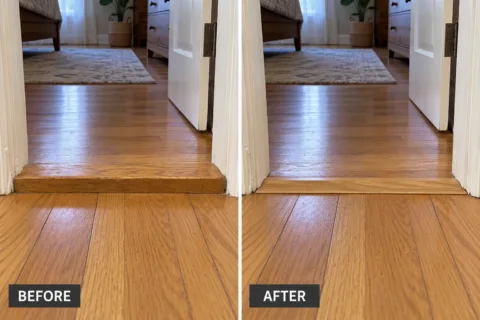
Changing a raised threshold or an awkward transition can address the particular crossing that bothers you. Describe the change you want so Keystone can assess whether to lower or alter the threshold or remove an agreed transition obstruction, with the adjoining door and floor considered together.
The threshold’s function and its relationship to the door, flooring and surrounding materials need review. A visible height difference does not establish that a component can simply be removed. We discuss the actual conditions and the desired transition without prescribing universal dimensions or promising that one change will eliminate every trip concern along the route.
During the working visit, describe the location from an accessible position without demonstrating a difficult crossing. We review the proposed change, product or material needs, delivery arrangements and price before approval. Broader floor reconstruction, structural alterations and whole-home remodeling are not assumed. The approved task does not provide fall-prevention, medical, ADA or whole-route safety certification.
Threshold lowering and trip-hazard removal here concern the identified threshold or transition component. We explain the physical change, its connection to the door or floor and the finish left around it. Create a free account and book an available working visit for the property; the list can be built onsite. You approve the materials, work and price before suitable work begins when practical.
Questions about threshold lowering & trip-hazard removal
How should I describe threshold lowering or trip-hazard removal?
Identify the particular threshold or transition and explain the crossing concern from an accessible position. Tell us which adjoining door or floor surfaces you want retained. Leave the component intact so its function and connections can be reviewed.
Can the work physically change the threshold?
Yes. A suitable threshold can be lowered or altered, or an agreed transition obstruction removed. The proposed change is defined around the actual component, door and flooring before approval.
What finish details should we discuss?
Consider how the altered area will meet the retained floor and door. The component can have a sealing or transition function as well as a visible height. We explain the included materials and surrounding finish so the change remains a defined project.
Do I need to choose a replacement component first?
You can begin by describing the crossing you want changed. Existing material, the door’s operation and the adjoining floor guide the options. If you already have a product or finish preference, share it during the visit without removing the current threshold.