
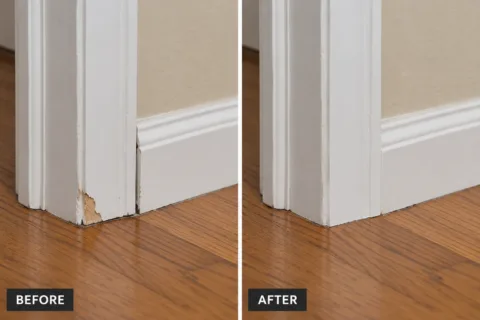
A split casing edge, loose molding or damaged baseboard can draw attention to an otherwise finished room. Trim and molding repair starts with the affected piece and the surrounding material. We look at what is loose, broken or missing and whether a localized repair can address it without turning a small finish detail into an undefined room project.
The shape of the trim matters as much as its width. Profiles, thicknesses and corner details influence how a repaired section meets the existing run. Material availability also matters, especially with older molding. We discuss a practical repair boundary and any visible differences before work, rather than promising an exact reproduction of a historic profile or aged finish.
During the working visit, point out the damaged areas and explain any changes you have noticed. We review the component, access, material choices and price before approval. Carpentry and final painting are identified separately so you know the intended stopping point. Moisture or movement concerns need assessment before covering them with repaired trim; this is finish-component work, not structural repair.
A molding repair may secure a sound piece, restore a joint or replace a damaged section with an available profile. The plan identifies retained material and where finishing stops. Bring the affected areas together in your free account’s property list and book an available working visit; you can also build the list onsite. We explain materials and price before approval and start suitable work when practical.
Questions about trim & molding repair
Can a small damaged section be repaired?
The condition of the piece and surrounding material determines whether a localized repair is suitable.
Will replacement trim match perfectly?
An exact profile or finish match is not promised. We discuss available options and likely visible transitions.
Does trim repair include painting?
The scope identifies any finishing work. Dedicated trim painting is available as a separate service to discuss.
Can loose trim simply be fastened again?
That depends on the trim and attachment area. Recurring movement or damaged material needs assessment first.
Is an entire room of new molding included?
No. Repair boundaries are defined; new installation is a distinct request.
Will the work fix moisture behind the trim?
No. The cause and affected area need separate assessment before trim work proceeds.
What should I identify before trim repair?
Point out the damaged piece, neighboring joints and the finish you want retained. Profile availability and attachment condition affect whether a section can be repaired or replaced. Discuss visible transitions before choosing a new piece by color alone.