
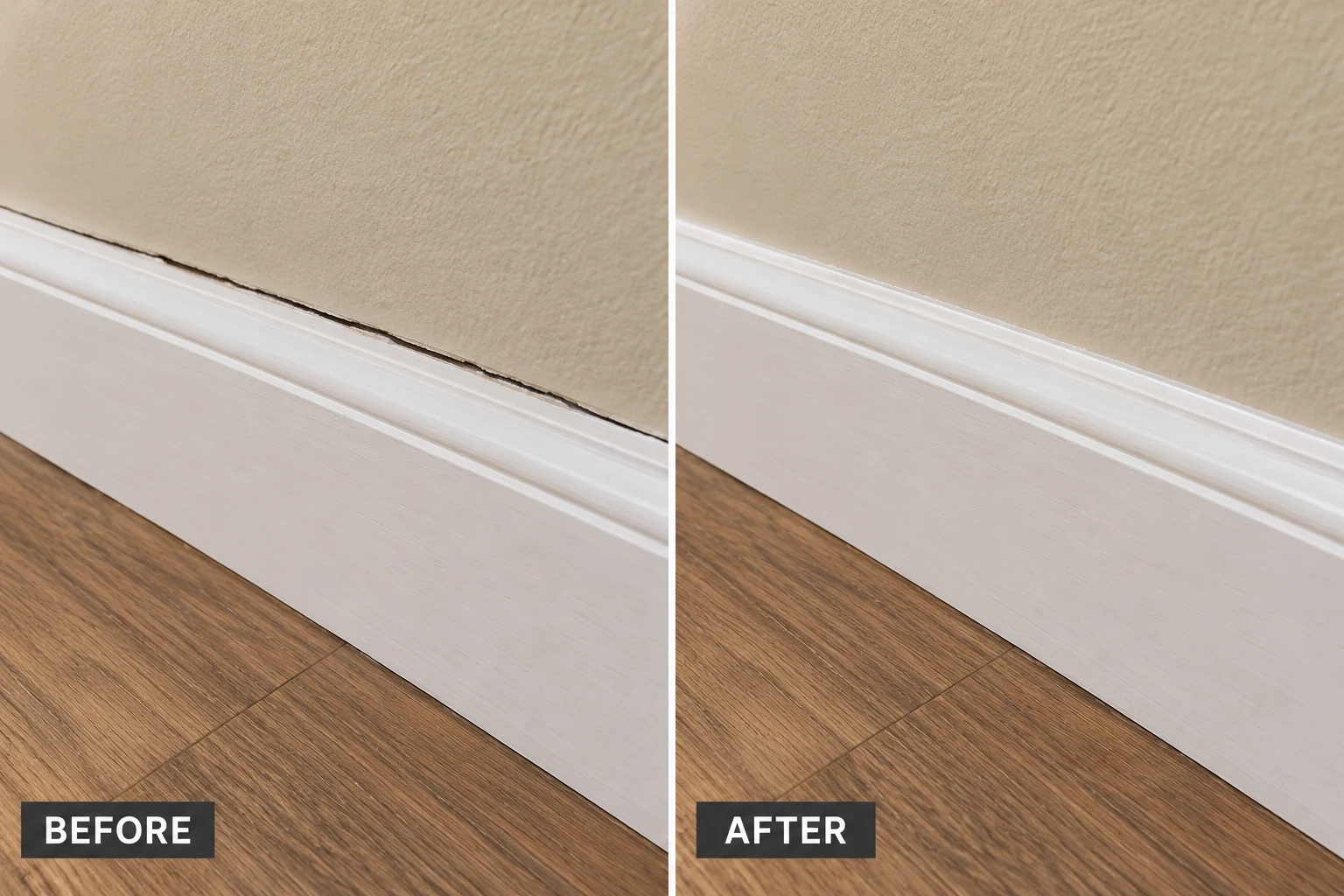
A narrow opening where trim meets a wall can interrupt the finished appearance of a room. Interior caulking begins with the actual joint and the condition of the pieces around it. We assess whether the opening is a suitable finish gap or a sign that a loose component, movement or another concern needs attention before sealant is considered.
The materials on each side and the intended painted finish influence product selection. Existing caulk, older paint and nearby details can also affect preparation and the visible result. We discuss the areas and finish expectations without treating caulk as a repair for damaged trim or promising that every joint can be made permanently invisible.
During the working visit, show us the trim runs or interior gaps you want reviewed. We define the suitable joints, preparation, access and price before approval. Painting is a separate finish decision. Interior caulking does not establish exterior weather protection, leak correction or concealed repair, and designed movement, ventilation or drainage openings are not automatically filled.
For interior trim & gap caulking, the agreed work can include review of the requested interior finish joints; trim, adjoining-material and gap-purpose assessment; sealant and planned-paint compatibility discussion; agreed preparation and caulking of suitable joints; defined curing and painting handoff. We confirm the included tasks, materials and price with you before work begins.
Questions about interior trim & gap caulking
Can caulk fix loose molding?
Loose or displaced trim needs assessment; caulking alone is not that repair.
Does this include exterior gaps?
No. Exterior gap sealing is a separate service with different location and material considerations.
Will the caulk be painted afterward?
Painting is a separate decision identified in the agreed scope.
Can all interior openings be filled?
No. Designed movement, drainage and ventilation openings need to remain distinct.
Will the joint stay invisible forever?
No permanent appearance or no-recurrence guarantee is made.
Should I scrape the old paint and sealant first?
No. Leave them intact for assessment, especially when their condition or history is uncertain.