
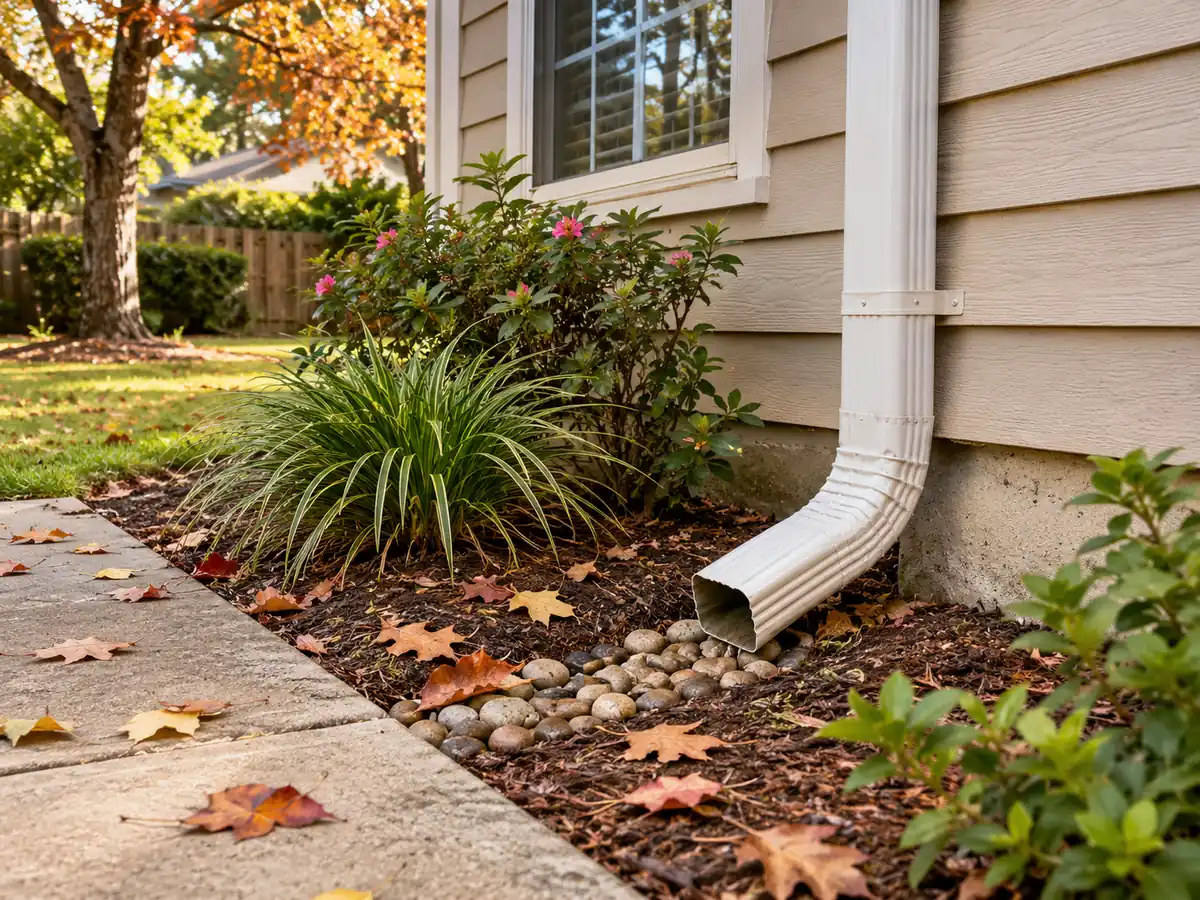
Fall can be a useful time to review gutter and drainage questions, but the calendar does not describe every property. Trees, roof arrangements, earlier work and observed water movement differ. Start with the conditions you actually know rather than assuming the same task or interval suits every home.
Make a short record from safely accessible areas and identify the next assessment needed. This is a planning exercise, not a roof inspection or a drainage design. Do not climb, enter water or approach a questionable area to complete a seasonal checklist.
Begin with what has changed
Review earlier observations and note anything new: a visible disconnected section, debris noticed from a safe position or a recurring area of water accumulation. Record the location and date without assuming one observation explains the entire system.
Keep the event and discovery dates separate when they differ. “Noticed after Tuesday’s rain” is more accurate than assigning a cause that has not been established. Earlier photographs or records may help show whether the condition is new.
If there is an immediate hazard or flooding, follow the appropriate official or qualified response route. A routine seasonal appointment should not be relied on as emergency response or permission to enter an unsafe area.
Think beyond the visible gutter
PNNL’s gutter and downspout guidance places these components within broader water management around a home. Its purpose includes conducting roof runoff away from the building, with the surrounding site and other exterior details also relevant.
That does not mean a visible issue identifies the right repair. Cleaning, component work and a broader drainage question are different scopes. Ask what the provider can assess and whether another specialist is needed before a solution is chosen.
A finished maintenance task is not a guarantee against future leaks or flooding. Keep the expected result tied to the actual approved work. Avoid turning a limited visit into a claim about every part of the property’s water management.
Keep observations safely at ground level
Use only locations you can access safely in ordinary conditions. State when an area has not been viewed rather than trying to fill every gap. A provider can plan an appropriate assessment with that limitation clearly recorded.
Optional photographs can show a general location when safe, but they do not establish concealed conditions or the inside of a drainage system. Do not use a photograph as proof of a diagnosis or enter a hazardous area to obtain one.
Record any access constraints, including locked areas, pets or landscaping that affects the planned route. Discuss who will handle those arrangements. The appointment record should reflect actual access rather than simply say “everything accessible.”
Use your property’s history
Gather records of earlier cleaning, repairs or specialist assessments. Identify the component and location involved. A general note that “drainage was handled” may not explain what was done or whether it relates to the present concern.
If a downspout or other feature has been changed, retain the actual work details. Do not assume that a familiar-looking replacement operates like the earlier arrangement. The current configuration needs review on its own terms.
Note repeated observations without declaring a recurring cause. A wet area can be useful information while still requiring appropriate assessment. The record should help the next person ask better questions, not force a predetermined solution.
Distinguish maintenance from design decisions
A request to review a visible component does not automatically include grading, excavation, roofing or a new drainage system. Ask which tasks are available within the proposed service and which require a different provider or professional route.
Do not redirect water based on a generic online layout. Site conditions, discharge arrangements, neighboring properties and applicable requirements matter. The relevant qualified assessment should guide a change rather than a universal dimension copied from another property.
If ownership, shared access or a boundary is uncertain, resolve the relevant permission before changes. A routine physical assessment does not settle legal rights or responsibility between properties. Keep those decisions with the appropriate records and advisers.
Agree on a specific visit scope
Identify the locations and tasks to be reviewed, what is known and what remains uncertain. Ask what the visit can establish and how findings will be recorded. This helps separate an initial assessment from an approved repair.
For any proposed work, discuss access, protection and the actual result intended. Ask how an unexpected condition will be handled. Further work should be explained and priced for approval rather than assumed to fall within a broad seasonal request.
Keep any material or replacement decision pending until the actual application has been reviewed. Buying an extension or component before assessment does not establish that it is suitable. Retain the exact product information if you already have a candidate.
Also identify who will review findings if the property is managed by someone else. The person providing access may not be able to approve a change. Have the decision route ready so a useful assessment does not end with an unclear handoff.
Plan follow-up around observed needs
Retain the work record, date and any supplied guidance. If another assessment is recommended, give it a separate owner and status. A completed appointment should not automatically close a drainage question that remains unresolved.
Discuss future checks in light of the actual property and relevant provider guidance. Avoid assuming that every home needs the same fixed visit schedule. Needs can change after landscaping changes, component work or a new observation.
Keep later observations dated so they can be compared with the earlier record. A quiet period does not establish a permanent guarantee, and a new concern does not automatically establish the same cause. Use the record to support a fresh discussion.
Keystone’s seasonal home services provide a starting point for suitable tasks and assessment boundaries. Get Started to discuss the actual property onsite. You approve scope and price before work; suitable approved tasks may begin during the same visit when practical.
Posted by: Alex Keystone
Sources & Further Reading
- PNNL: Gutters and Downspouts