
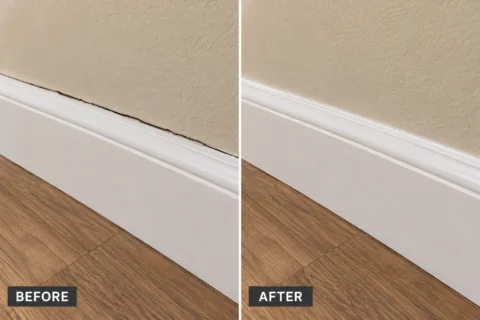
Interior caulking renews suitable finish joints where trim meets adjoining surfaces. Keystone defines the gaps with the existing materials and intended painted finish in view, so a fresh bead has a clear purpose.
Loose trim or recurring movement may need repair before the joint can be renewed. Existing caulk, older paint and nearby details affect preparation and appearance; sealant is not a substitute for damaged-trim repair.
Not every narrow opening should be filled. Designed movement, ventilation and drainage features must be distinguished first. This work does not establish exterior weather protection, leak correction or concealed repair, and permanently invisible joints are not guaranteed.
Create a free account and book an available working visit. Identify the rooms and trim runs under your property or build the list onsite. We explain suitable joints, preparation, access, materials and price before approval, then begin when practical.
Questions about interior trim & gap caulking
How should trim caulking and painting be planned together?
Identify the surfaces and finish you want painted. The adjoining materials and intended coating guide sealant choice, sequence and product-specific curing requirements. Painting needs its own agreed scope, including which surfaces are included. We explain when the selected product can be painted or used.
Should I prepare the joints first?
Leave old coatings and uncertain material intact for assessment. Point out loose or moving components so repair can be distinguished from renewing the finish joint.