
Small seams. A cleaner finish.
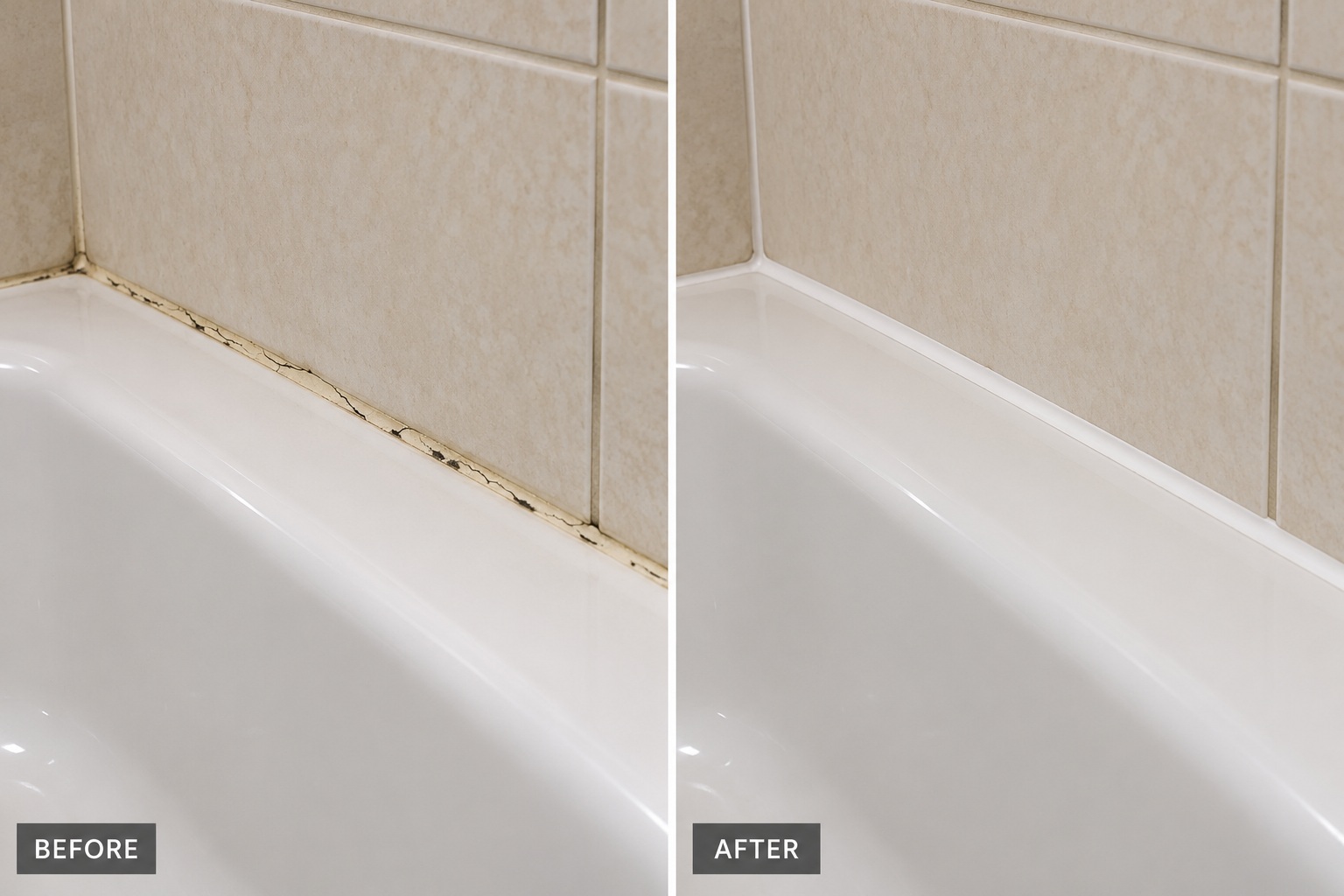
Split caulk around a tub, a separating countertop joint or an uneven gap beside trim can leave a room looking worn. Caulking starts with understanding what the joint connects and why the existing seal has failed. Adding a bead over loose or contaminated material may not address the problem underneath.
Our caulking services cover suitable kitchen and bathroom joints and the interior trim gaps described below. We look at the adjoining surfaces, signs of movement and the condition of the old material. Tell us where water collects or a gap keeps reopening so the preparation and product choice reflect the actual location.
The agreed work identifies which old material needs removing, how the joint will be prepared and the finish you expect. Sealants have different uses and curing requirements; paintable trim caulk is not interchangeable with every wet-area product. Damaged backing, persistent movement or moisture may require attention beyond a new bead of sealant.
Create a free account, add the caulking locations to your property list and book an available working visit after confirming address eligibility. You can also build the list onsite without measuring every joint. We review surfaces, explain the materials, price and curing precautions, and begin approved work when practical.
Find the service you need.
Questions about Caulking
Can new caulk go over the old bead?
Loose, failing or contaminated material usually needs preparation rather than simply covering it. We review the existing joint before selecting the approach.
Can I use the shower immediately afterward?
The product and conditions determine the curing instructions. We explain the relevant waiting period for the material used rather than giving one time for every sealant.
Will caulk fix a joint that keeps moving?
Not necessarily. Recurring separation can indicate movement or another underlying issue. A new bead is not presented as a cure for a problem outside the agreed caulking work.
What should I list when requesting caulking services?
Identify each joint by room and its specific fixture or trim location, and explain what has changed. A separating bead, loose material and a joint that repeatedly moves may need different preparation or a separate repair decision. Mention any moisture history without removing uncertain material to investigate it yourself. We review the adjoining surfaces and the intended use before agreeing on the product and work boundary. Discuss when you need the area back in use so curing requirements are understood; the same waiting period should not be assumed for every location.