
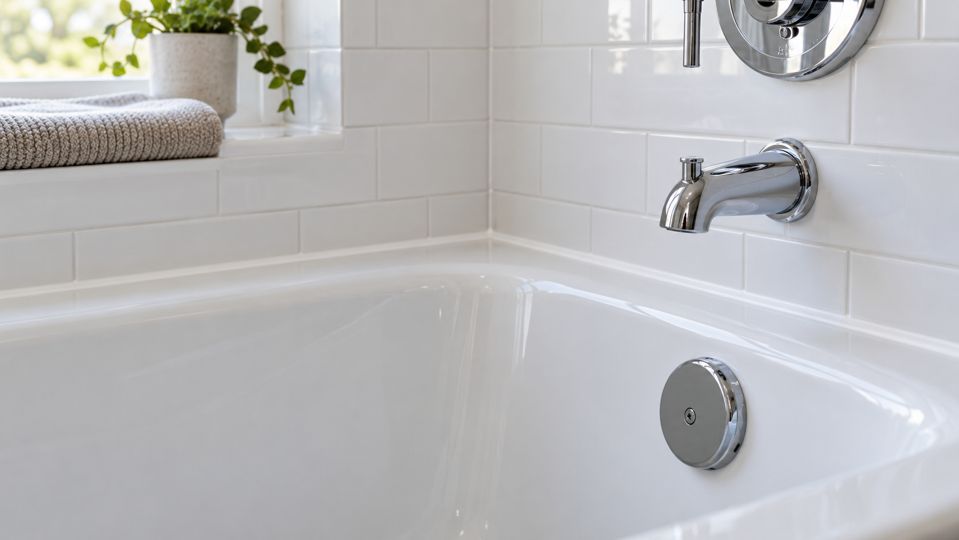
Before scheduling bathroom caulk renewal, identify the joint, describe the condition, and ask what preparation and out-of-use time the selected product requires. A neat new bead is only one part of the job. The surrounding surfaces and any unresolved moisture concern should be considered before the work is treated as a routine cosmetic refresh.
This guide helps you organize a request for accessible bathroom sealing work. It does not diagnose a leak, specify a product for every material, or turn a visible surface repair into proof that a wall or shower assembly is waterproof.
Identify the exact joint
Say whether you mean the bathtub-to-wall joint, a sink edge, a countertop junction, or another location. Include a wider photograph showing where it is in the room and a detail view of the condition. “Redo the bathroom caulk” can mean very different amounts of work to different people.
Describe what you see: separation, missing material, a rough previous application, or a change in appearance. If you do not know whether the material is caulk, grout, or something else, say so. The material should be identified rather than selected from a photograph by guesswork.
Keep different locations separate in your list. A joint beside a painted vanity wall and one regularly exposed to shower water should not automatically receive the same product or preparation plan. Naming each area makes the proposed scope easier to review.
Explain any history of water or repeated failure
Mention water appearing outside the intended wet area, soft or damaged nearby material, or a joint that has been renewed repeatedly. State when you noticed the condition and whether another repair has already been attempted. These observations can change what needs evaluation before sealing.
Do not hide a recurring problem behind a request for a cleaner appearance. If the same location opens again after each attempt, explain that history. Ask whether routine renewal is appropriate or whether the underlying condition needs a different assessment first.
A photograph can document the visible surface, but it cannot establish every condition behind it. Keep that limitation in mind when discussing the repair remotely. The plan may need to be confirmed after the actual area is reviewed.
Choose the product for the surfaces and use
DAP’s sealant selection guidance distinguishes products by application, including moisture-resistant choices for kitchen and bath work. Use the selected product’s current instructions to check the intended surfaces and conditions. A familiar tube color or a general “bathroom” label is not the whole specification.
Ask who will select and supply the product. If you have already purchased something, share its exact name and label rather than assuming it belongs in the job. The person reviewing the work should be able to explain whether it suits the proposed joint.
Also discuss the desired color and whether painting is part of the plan. DAP advises checking the label for paintability and cure requirements. Do not assume every sealant can be painted or that paint can be applied whenever the surface first feels dry.
Ask about preparation, not just application
Have the proposed scope explain how the existing material and receiving surfaces will be handled. This is more useful than a promise to “run a new bead.” Ask what condition the area needs to be in before new product is applied and what would cause the work to pause.
For example, DAP’s technical sheet for one kitchen-and-bath silicone calls for clean, dry, sound surfaces free of old material and contaminants. That is an example of why preparation belongs in the scope; it is not a recommendation to use that product on every bathroom joint.
Clarify how adjacent finishes will be protected and whether removing the old material may reveal a separate repair need. If that happens, agree that the condition will be explained before the scope expands. A concealed issue should not be silently covered just to keep to the original task description.
Plan when the area can return to use
Ask when the bathtub, shower, or sink can be used again after the work, based on the product actually installed and the conditions required by its instructions. Have that information provided clearly at the end of the visit. Do not substitute a general internet timing rule for the selected product’s directions.
Bring household scheduling constraints into the discussion before booking. If this is the only shower, say so. Plan an alternative if the required waiting period conflicts with the way the household normally uses the room.
Keep the relevant time recorded with the work information. “Finished this afternoon” is less useful than knowing what was installed and when the stated return-to-use period ends. Ask about any care or cleaning restrictions that apply after installation as well.
Define the finish expectations
Discuss which joints will be renewed and which will remain untouched. If appearance matters across a long run, make sure both parties understand the intended start and end points. A partial renewal may be a different visual result from replacing the full agreed joint.
Separate the sealing task from grout repair, tile repair, painting, plumbing, or other work. Those tasks may be related, but they should not become invisible assumptions inside a single line item. Ask which are included and which require separate evaluation.
If the desired result includes removing old staining or repairing adjacent damage, identify that goal explicitly. The answer may depend on the material and condition. A new surface bead should not be promised as a cure for every nearby cosmetic issue.
Prepare the room and keep the record
Ask what should be removed from the work area before arrival. Clearing toiletries and personal items gives access to the actual joints and reduces the need to move belongings during the job. Confirm any cleaning or drying preparation requested for the selected process.
After completion, keep the product name, affected locations, return-to-use instructions, and any unresolved condition in a short record. Review the visible work against the agreed scope, while recognizing that a surface review does not prove the condition of hidden assemblies.
See Keystone’s caulking and weatherproofing service and bathroom updates page for related work that can be evaluated. When you request an estimate, include the exact joints, photographs, problem history, and room-use constraints so the appropriate scope can be confirmed.
Posted by: Alex Keystone
Sources & Further Reading
- DAP: Choosing a Caulk or Sealant.
- DAP: Caulks and Sealants.
- DAP: Kitchen-and-Bath Silicone Technical Sheet — one product example; use the current instructions for the installed product.