
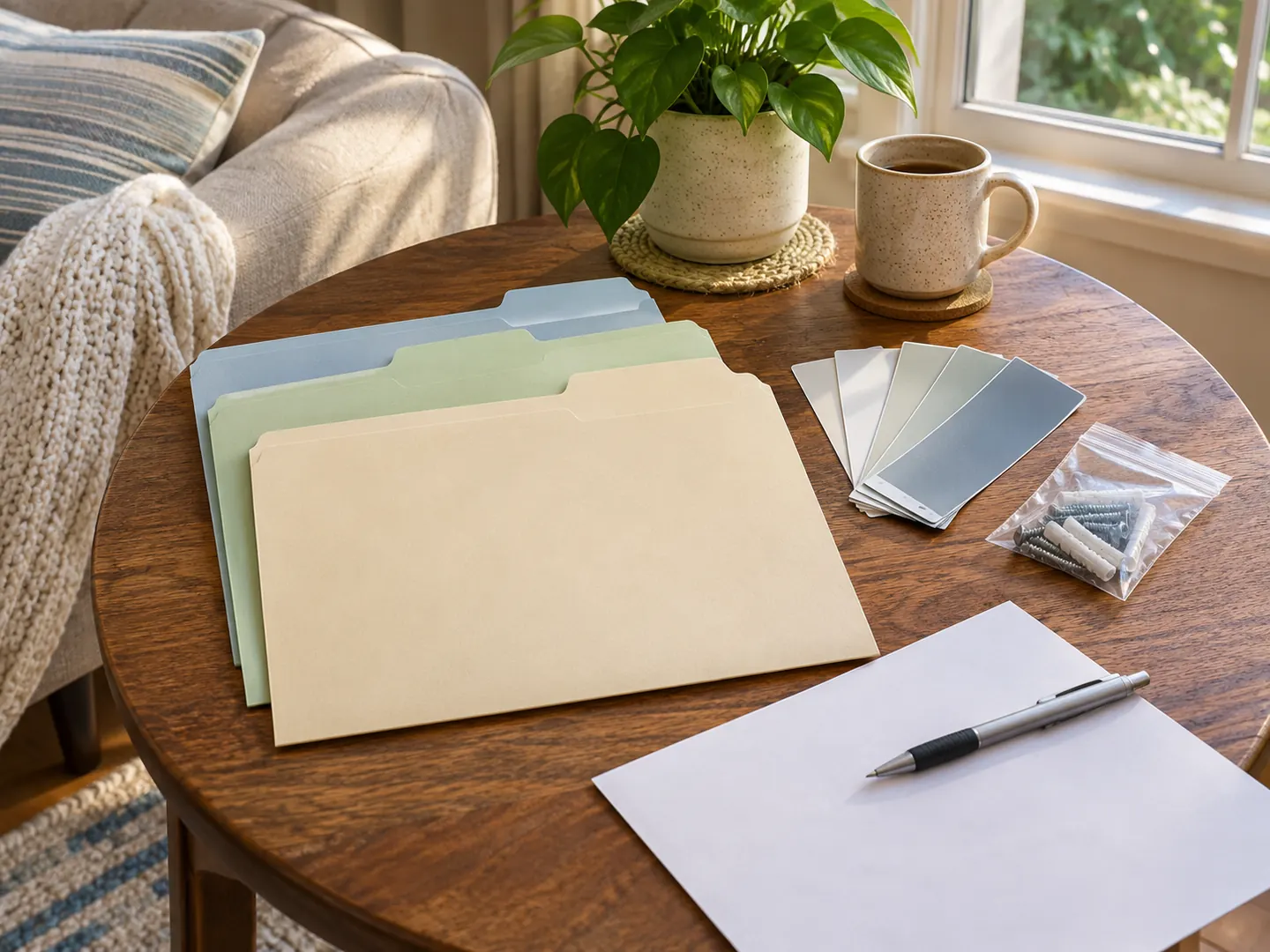
Keep the information you would need to explain the next decision: what the problem was, what work was approved, what was completed and which product or finish was used. A simple folder and a short log can do that job. You do not need to create a detailed record of every household action.
The best system is one you can update after a visit without reconstructing the whole project. Start with the records already available and add structure only where it solves a recurring confusion. An incomplete but honest entry is more useful than a polished record that quietly fills gaps with guesses.
Make three places for three different kinds of information
Use one place for open tasks, one for completed work and one for product information. They can be sections of a notebook or folders in a tool you already use. The names matter less than keeping a future idea separate from work that has actually been approved or completed.
An open-task entry should say where the issue is, what you noticed and the next decision. A completed-work entry should say what was done and what remains. A product record should identify the actual item or finish rather than the general category.
For example, a task called “bedroom door” is hard to use later. “Guest bedroom: latch catches during ordinary closing; assessment requested” has a location, behavior and status. After work, add the actual outcome without replacing the original wording.
Use a short record that survives a busy day
Choose fields that answer practical questions. If you are not going to maintain a field, do not make it essential to the system. A household log is not improved by blank columns that make every entry feel unfinished.
- Date: when you noticed the issue or when work occurred; label which event the date refers to.
- Location: room, opening or component.
- Observation: what happened, without assuming the cause.
- Decision: assess, approve, defer or obtain information.
- Result: actual completed work and any limitation.
- Documents: where the scope, receipt or product information is stored.
If a date is uncertain, write “noticed around early March” rather than supplying a precise day. Do the same with product identity or previous repairs. The point is to make the record reliable, not to make every field look complete.
Keep the agreed scope with the result
Save the approved scope and price record with the related completion information. If the work changed after assessment, keep the change with the original rather than saving only a final receipt whose description may be brief.
Separate finished tasks from deferred finish work, pending materials or conditions referred to another provider. “Door adjustment completed; paint touch-up not included” prevents a later reader from assuming the entire opening was refinished. If that door needs attention again, keep this history with a request for door repair or adjustment. A checkmark alone cannot carry that distinction.
Keystone’s final walkthrough guide can help frame the closeout conversation. Use the actual agreed scope to evaluate completion, not an earlier wish list that may have contained optional work.
Save enough product information to identify the item
Useful information may include manufacturer, model, finish, size and the location where the item is installed. Keep a readable photograph of a label or the original product page when appropriate. A store receipt saying only “hardware” may not identify the replacement later.
For paint, retain the actual label, product line, color and sheen if known, and say which surface received it. Do not assume that one can left in storage represents every wall in the room. If the product is unknown, leave that explicit.
Keep instructions that belong to the installed product. A manual for a similar model is not proof of the requirements for the item you own. When a product is replaced, mark the older record as superseded instead of letting both appear current.
Choose file names that answer where and what
A consistent name can be simple: date, location and subject. “2027-02-14 guest-bedroom door scope” is easier to find than a series of files named “estimate final.” Use the work date or document date accurately; do not rename an old photograph as though it records a later visit.
Keep photographs with a short note explaining their role. Was the image taken before work, during assessment or after completion? A close-up without a date or location can be mistaken for a different room when several fittings look similar.
You do not need to save every duplicate. Keep the original record and the versions that explain a material decision. If you remove a redundant copy, make sure the retained file still opens and contains the information you expected.
Make privacy part of the filing habit
Keep access codes, account credentials and sensitive personal information out of a general repair log. If a provider needs access instructions, share them through the appropriate private process. The household’s long-term repair record does not need to reproduce a temporary entry code.
Before sharing a photograph, check for documents, faces, addresses and screen contents that are not relevant to the issue. A record useful to your household is not automatically suitable for public posting. Keep marketing permission separate from the fact that a project was documented.
If more than one person manages the home, agree on where current records live. Avoid sending copies to several places without saying which version is authoritative. A short shared note pointing to the current folder may be enough.
Review records when a decision arises
You do not need a weekly paperwork ritual unless it helps your household. Update the entry after work, then consult it when the issue returns, a related product is ordered or another person needs to understand the history.
If a condition recurs, add a new dated observation. Do not overwrite the previous repair result or declare the earlier work defective solely because a new symptom looks similar. The record should help a qualified reviewer evaluate the timeline rather than decide the cause in advance.
For broader planning, the home maintenance plan discusses keeping future needs manageable. You can keep these household records privately in the system you prefer, without a subscription or monthly service purchase.
When you need help with a new or recurring issue, request a free estimate and describe what’s happening. If an old receipt or photo helps explain the issue, you can share it. You can also start with what you remember.
Posted by: Alex Keystone