
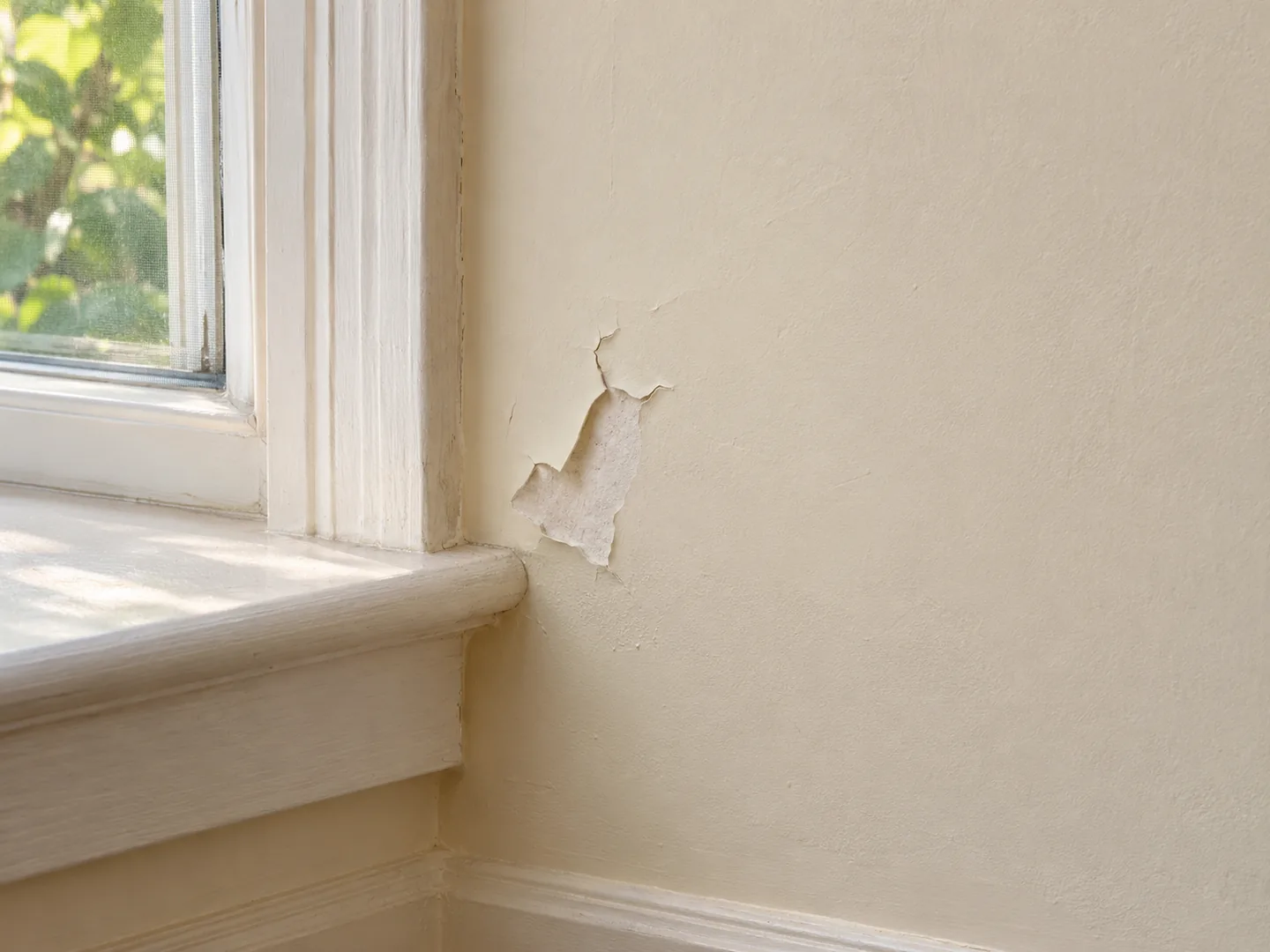
Before repainting peeling interior paint, ask what is losing adhesion, whether moisture or another condition remains unresolved, and what preparation is appropriate for the existing coating and surface. A new color is a finish decision. It does not, by itself, answer why the old coating is coming away.
You can prepare a useful request without scraping the wall or deciding which primer to buy. Record where the peeling appears, how it has changed and what you know about previous work. Keep the assessment separate from authorizing a cosmetic cover-up.
Describe the pattern before naming a cause
Identify the room, wall or ceiling, and approximate area as best you can from a safe position. Say whether you see small flakes, a loose edge, a larger lifting section or damage close to trim. A wider photograph can help explain the location without requiring you to disturb the coating.
Include when you first noticed the change. Was the surface recently painted? Has the area been repaired before? Is the peeling confined to one patch or present in several locations? These are observations, not proof that a particular contractor, product or weather event caused it.
Avoid pulling at the coating to find out how far it will come away. That can change the condition being assessed and may disturb material whose composition is unknown. Explain what can be seen and let the appropriate reviewer establish the next step.
Separate adhesion from appearance
Sherwin-Williams describes peeling as a loss of adhesion and lists several possible surface, moisture and coating conditions. That distinction matters: an unattractive mark, an old color and a coating that is not holding are different problems even when they appear on the same wall.
Ask which layers and materials need evaluation. Do not assume the visible topcoat is the only affected layer, or that the underlying surface is sound because part of it looks smooth. The proposed preparation should follow the condition actually found and the instructions for the chosen products.
There is no universal primer or quick test prescribed by this guide. A product recommendation needs to follow assessment of the surface, previous finish and intended application. Buying a coating first can turn a useful question into pressure to use a product that has not been confirmed suitable.
Bring moisture history into the conversation
Tell the reviewer about known leaks, dampness, staining, previous water events or other relevant changes. Distinguish what is known from what is suspected. “A roof leak was repaired last month; records available” communicates something different from “the roof must still be leaking.”
The manufacturer’s peeling guidance includes identifying and correcting a water source before repainting where water is involved. A finish repair should not be treated as proof that a moisture concern has been resolved. Ask who will establish the condition and whether another qualified provider is needed.
If moisture work has already occurred, retain the date, location and useful documentation. Do not substitute a verbal “all fixed” for an explanation of what was addressed. The paint reviewer can then discuss the limits of the proposed cosmetic work without inheriting an unsupported conclusion about the building.
Check what is known about older painted surfaces
EPA’s lead-safe renovation guidance explains that homes built before 1978 may contain lead-based paint and that renovation activities can create dust containing lead. Share the building’s known age and existing paint-assessment information before anyone proposes scraping, sanding or removal.
Paint color, a photograph and the appearance of a loose flake do not establish lead content. Ask for the appropriate assessment, qualifications and work process before disturbance. Do not interpret this article as a home-testing procedure or an instruction to begin surface preparation yourself.
Keystone’s ordinary paint or Drywall services are not a representation that Keystone performs lead testing or abatement. Where those needs arise, keep them with an appropriately qualified provider. The plan should identify which work can proceed and which decision must be resolved first.
Ask for a preparation scope you can understand
A useful proposal explains the area to be addressed, what existing material is suitable to remain, the planned preparation and the finish work included. It should also state what happens if evaluation reveals more affected material than initially visible.
Ask whether adjacent trim, fittings or belongings must be moved and who handles that work. Discuss protection and access in terms of the actual room. A ceiling area above a bed creates different preparation questions from a small wall area in an empty utility space.
Keep product instructions with the proposal when a coating system is selected. Preparation, application and return-to-use requirements are product-specific. An article cannot set a single drying time or guarantee a room will be ready for an event just because the painted area seems small.
Make the finish boundary a separate choice
After the condition and suitable preparation are understood, decide how far the visible finish should extend. A localized repair, repainting one wall and changing the whole room are different appearance decisions. Ask what each option is intended to accomplish.
If you want the existing color retained, save the paint name, product line and sheen if known. A matching color label is useful information but not a promise that a repair will be invisible. Lighting, surrounding condition and the actual finish need to be part of the expectation.
Our touch-up versus repainting guide addresses that appearance conversation. Keep it separate from the adhesion question: deciding to paint a larger area does not remove the need to address why the original coating failed.
Use a request with a clear stopping point
For example: “Paint is peeling near the lower corner of the bedroom window wall. It was last painted about two years ago, and we have an older leak record. Please assess the existing condition and preparation needed before proposing the finish area. We want scope and price approved before work.”
Add the known room-use deadline if one exists, but leave room for the correct sequence. If another evaluation or material order is needed, record that as the next step. A deferred cosmetic finish can be an appropriate decision when an underlying question is still open.
For appropriate Drywall and interior paint repairs, begin with Get Started. You do not need to diagnose the wall before booking. Conditions, scope and price are reviewed onsite before approval, and work can begin during the same visit when practical for the confirmed materials and preparation.
Posted by: Alex Keystone
Sources & Further Reading
- Sherwin-Williams: Peeling
- EPA: Lead-Safe Renovations for DIYers