
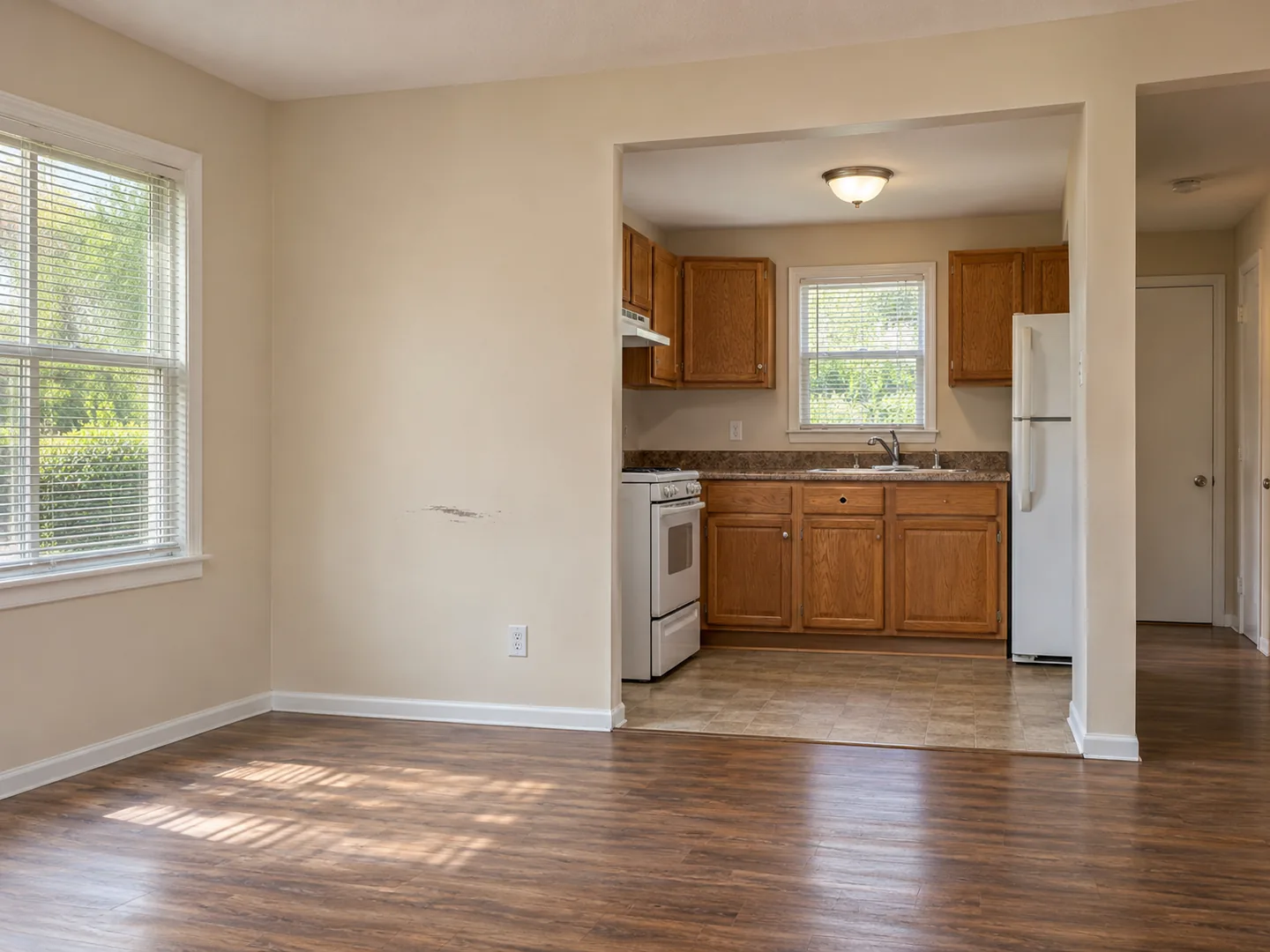
A rental turnover list works better when it distinguishes an observed condition, the work proposed in response and the reason you are considering that work. Damage, routine maintenance and an improvement are useful planning categories. They are not automatic conclusions about responsibility, a tenant’s deposit or what a property is legally required to provide.
Keep those legal and financial decisions separate from the repair provider’s task list. You can ask for a condition to be assessed and a scope proposed without deciding who caused it. This article explains how to organize that conversation so an optional upgrade does not become an assumed part of making the property ready.
Begin with a dated record of what is present
Walk through accessible areas when you have authority and a safe opportunity to do so. Give each observation a room and a short description. “Living-room door casing has a broken lower edge” is useful. “Tenant damage” is an attribution that does not explain the work.
Record when you noticed the condition and whether an earlier record exists. Keep older photographs with their original dates and labels. A previous photograph can supply context, but a comparison does not by itself establish how a problem developed or who is responsible.
Use separate entries for separate locations, even if the conditions look similar. Four loose cabinet pulls may be one proposed work group, while a damaged mounting area needs its own decision. Combining everything into “repair kitchen hardware” can hide a materially different issue.
Use the categories to organize decisions
Repair can mean restoring an item that is damaged or not working as intended. Describe the observed limitation first, then ask what the repair would include. Do not assume every damaged component must be replaced, or that a cosmetic repair addresses a condition beyond the visible finish.
Maintenance can describe planned attention that supports ordinary use, such as following a product’s care instructions or addressing an identified adjustment. Record the basis for the task. A recurring calendar entry is an organizing choice unless an actual product instruction or other appropriate source establishes the interval.
Improvement changes what the property offers or how it is arranged: adding storage, choosing a new hardware style or changing a finish beyond the affected area. An improvement may be worthwhile. It should still be a deliberate owner decision rather than a hidden condition of approving an unrelated repair.
Some entries cross categories. Replacing an unavailable damaged fitting may require a different product, while changing a whole matching set is an appearance preference. Split those decisions instead of arguing over one label for the entire project.
Separate the necessary scope from the chosen finish
For each item, ask what work is needed to address the stated condition and which additional choices affect appearance. A limited wall repair, a larger paint area and a room-wide color change are different scopes even when discussed during the same walkthrough.
Ask what will remain visible after the proposed work. You may accept a localized finish difference in one room and prefer a broader, consistent finish in another. Make that choice property-specific; do not use “make ready” as a substitute for explaining the desired result.
When matching an older component is uncertain, identify the decision before ordering replacements. Keep a photograph, product record or spare item if it is already available. The repair provider should not have to infer whether a close match, exact match or deliberate redesign is acceptable.
Example: one cabinet, three possible approvals
Suppose a kitchen cabinet pull is loose and the surrounding finish has an old mark. Your first request is to review the loose connection and determine a suitable repair. That does not require a conclusion about the previous occupant.
A second decision is whether the existing pull can remain or an appropriate replacement is needed. A third is whether the owner wants all cabinet hardware changed for consistency. Record that last choice as an optional improvement if it is not necessary to the agreed limited repair.
Use the same approach for a door or trim section. Identify the ordinary-use problem, the proposed work and any matching limitation. This is a decision example, not a report of an actual Keystone property or a promise that every fitting can be repaired.
Do not let the turnover deadline erase unresolved conditions
Share the planned occupancy date, access windows and other work scheduled at the property. Explain which rooms must remain available. The provider can then discuss a practical sequence rather than discovering the deadline after materials have been selected.
If there is moisture, recurring movement or an unfamiliar condition, record it as needing evaluation. A clean paint finish is not evidence that its underlying cause has been resolved. The right next step may involve a qualified specialist before ordinary cosmetic work proceeds.
Bring known age and painted-surface information into the conversation. EPA’s lead-safe renovation guidance explains that pre-1978 homes may contain lead-based paint and that disturbing affected surfaces can create lead-containing dust. Ask for the appropriate assessment and qualifications before affected work; do not infer paint content from a photograph or assume Keystone provides lead testing or abatement.
Make the approval status visible
Beside each task, write proposed, approved, deferred or awaiting information. Give one person responsibility for answering scope questions. If a property manager can authorize only certain work, communicate that boundary through the private planning process.
Keep added work visible rather than folding it into an old description. An estimate for a localized repair should not become blanket permission to replace neighboring material. Ask how a newly discovered condition and its cost will be explained before a decision is required.
At completion, keep the result with the original entry. State what was done, what remains and whether another decision is needed. A deferred improvement is not a failed repair, and an approved task is not complete simply because the property is ready to show.
Give the next turnover a better starting point
Retain product identities, finish selections, invoices and useful closeout notes by property. You do not need an elaborate system: a dated folder and a short list can prevent confusion between a repair completed this turnover and one still awaiting materials.
For appropriate rental-property maintenance and make-ready work, start through Get Started. You can begin with the issue you know about; a complete remote diagnosis is not required. Keystone reviews the property’s conditions, scope and price onsite before you approve work. Same-visit work is considered when practical, with materials and specialist needs kept explicit.
Posted by: Alex Keystone
Sources & Further Reading
- EPA: Lead-Safe Renovations for DIYers