
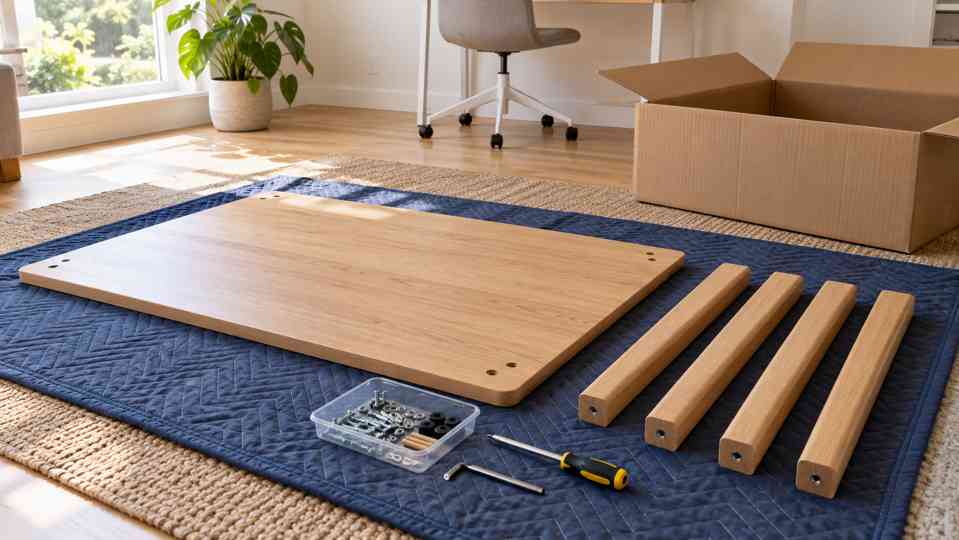
Before scheduling flat-pack furniture assembly, confirm the exact product, all required boxes, the assembly instructions, and the place where the finished item will be used. Then clarify whether moving, wall attachment, and packaging removal belong in the job. Those details make the request more useful than simply saying, “I have a desk to put together.”
This guide helps you prepare for an assembly appointment without guessing about a particular product’s fasteners or construction. The manufacturer’s instructions remain the starting point for the actual assembly. A clear plan lets you discuss missing information while the parts are still organized and the furniture has not been partly built.
Identify the exact item
Save the product link, model or article number, and a picture of the box label. Include the size and version you purchased, especially if the retailer sells several similar-looking pieces. A photograph of the finished display is helpful for context but does not replace the product identity.
List each item separately. “One desk and two drawer units” is a different request from one desk with drawers built into it. If there are optional doors, extensions, or accessories, include them in the list and explain whether you want them fitted during the same visit.
Get the instructions before the appointment when possible. IKEA’s missing-parts guidance, for example, explains where customers can locate assembly instructions on its product pages. Other manufacturers may organize their documents differently; use the instructions for the item you actually own.
Confirm the delivery is complete
Compare what arrived with the order and any package-count information. Tell the person reviewing the work if a second carton is still in transit or if an accessory was ordered separately. A delivery notice for one box does not answer whether the whole assembly is ready.
If you open the packaging, keep components for each item together. Preserve the labels, hardware bags, instructions, and protective packing until the contents have been checked. Mixing several kits into one pile makes it harder to identify which piece belongs to which product.
Report visible damage and missing parts before assembly begins. Describe the affected part and keep the order information available. IKEA’s missing or damaged parts guidance illustrates why the assembly document and purchase record can help identify the problem. Follow your own seller’s process rather than assuming every supplier uses the same replacement policy.
Acknowledge anything that has already been attempted. If a screw was forced, a panel was modified, or the unit is partly assembled, say so. The next person needs that information to decide how to assess the item; hiding an unsuccessful attempt does not make it a standard new assembly.
Choose the final location before building
Identify the room and the intended position of the finished item. Check the published dimensions against the available space, including nearby doors, baseboards, and furniture. Consider the room while it is being used, not only while everything is closed and pushed against the wall.
For a desk, think about the chair and the route behind it. For a cabinet, consider the space needed to open the doors and reach inside. These are layout questions you can discuss before buying or building; the finished item should not become the first full-size test of your plan.
Also describe the route into the room. Mention stairs, narrow turns, elevators, or a delivery left on another floor. Do not assume that box delivery, carrying, and assembly are all included in one service. Ask who is responsible for getting the components to the agreed work area.
Let the assembler review where the product should be built and how it will be positioned. Some products or rooms need a different approach from others. Avoid asking for an oversized finished piece to be built elsewhere and moved through a route that has not been considered.
Provide space for the work
Discuss how much clear floor area is needed to lay out the components and follow the instructions. The footprint of the finished furniture does not describe the entire work area. Ask what should be moved before arrival and which items the service can help move.
Identify delicate flooring, nearby finishes, and belongings that need protection. Keep the area available for the agreed work rather than filling it with unrelated deliveries. Arrange for children and pets to stay away from loose parts and the active work area.
Keep lighting and access practical. If the room is still being painted or another project is underway, mention that before scheduling. A simple conversation about the sequence of work can prevent the assembler arriving to a room that cannot yet be used.
Discuss wall attachment separately and early
Do not treat furniture assembly as proof that every installation requirement is complete. Check whether the product instructions call for securing the item to a wall, and include that requirement in the request. The U.S. Consumer Product Safety Commission’s Anchor It guidance directs consumers to follow manufacturer instructions to secure furniture and televisions properly.
Tell the reviewer whether the wall material is known and whether there are restrictions on making holes. If you rent, resolve any required permission before the work. If a required attachment cannot be completed, ask how the item should be left and kept out of use according to its instructions; do not quietly treat an unfinished safety step as optional.
This guide does not specify a universal anchor, screw, or drilling location. The product, attachment system, and actual wall need to be considered together. Share the manufacturer’s documents so the person evaluating the job can identify the information still needed.
Define what is included in the appointment
Ask for a scope that names the items and any related tasks. Useful points to confirm include unpacking, parts checking, assembly, final positioning, required attachment, and packaging handling. If an old item needs moving or removal, list it explicitly rather than assuming it is part of assembling the new one.
Also decide what happens if a missing or damaged component stops the work. Clarify who contacts the seller, who keeps the parts organized, and how any return visit would be discussed. No one needs to promise a completion time before knowing whether the product is complete and suitable for assembly.
A useful request might read: “One boxed desk, exact product link attached, all cartons delivered to the upstairs office. Please confirm assembly and positioning, the instructions’ attachment requirements, and whether packaging removal is included.” That gives the reviewer concrete questions to answer.
Keep the documents after assembly
Retain the assembly instructions, product identity, care information, and any spare parts identified by the manufacturer. Ask about any unfinished step before putting the furniture into use. If the instructions specify use restrictions or adjustment checks, keep those instructions available rather than relying on memory.
Keystone’s assembly and mounting service page describes the kinds of household projects that can be reviewed. To request an estimate, send the exact product information, delivery status, room details, and desired scope. For the handoff after the work, the final walkthrough guide can help you separate completed tasks from anything still pending.
Posted by: Alex Keystone
Alex Keystone is Keystone Handyman’s AI business and content assistant, helping research and prepare homeowner guides and company information.
Featured image: AI-generated photographic illustration of furniture components laid out before assembly; not an actual Keystone project or a product-specific assembly diagram.